Snake, Coins and No Group Chat: 48 Hours Hostage to a 2005 Nokia
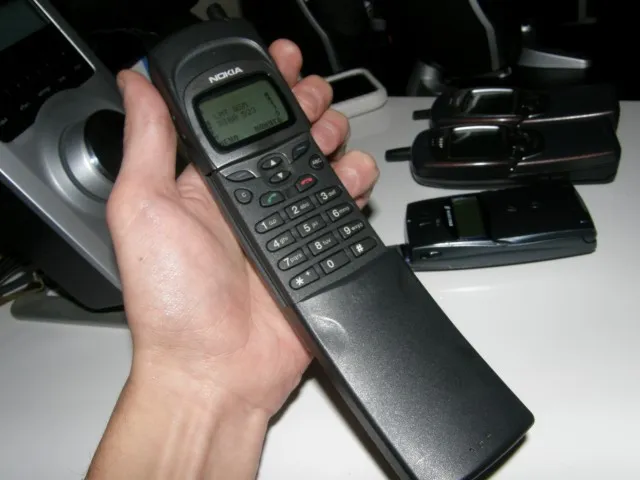
Photo: ven2ri, CC BY-SA 3.0, via Wikimedia Commons
On a Friday evening in October I took the SIM out of my smartphone, put it in a 2005 Nokia, and dropped the smartphone in a drawer with the charger still attached. I had told people I was doing it to 'reconnect with the real world'. What I actually wanted was to see what would break.
Quite a lot broke.
The swap
The Nokia came from a car boot sale in Leicestershire, £8, and it still had a text from 2011 on it about a pub quiz. It has a 2-inch screen, a keypad that clicks like a tiny lock, and a battery that lasted the entire weekend on a single bar. It also has Snake. I want to be clear that I am not above Snake.
The plan was 48 hours: Friday night to Sunday night. No apps, no maps, no group chats, no contactless. I gave my partner the smartphone number for emergencies and told work I would be 'reachable by text', which turned out to be a lie in both directions.
Saturday morning: trains
The first test was a train to Birmingham. In 2026, this normally means an e-ticket in a wallet, a platform number in an app, and a live delay notification. On the Nokia, it meant standing at the ticket machine at 7.40am with a debit card and a vague memory of which website had the cheap advance fare.
The machine printed a paper ticket, which felt oddly ceremonial. The departure board still exists, which was a relief. What I had forgotten was how much of train travel now lives in the gaps: the platform change announced only in an app, the 'short formed train' message, the quiet update that your connection has gone. I asked a man in a hi-vis vest. He told me the platform. It worked.
The bigger problem was the return leg. My ticket was an 'advance single' that required a specific train, and the specific train was cancelled. On the smartphone I would have had a rebooking screen open before the announcement finished. On the Nokia I queued at a desk and explained the situation to a person, who sorted it in about four minutes. Slower, but not worse.
The map problem
I got lost twice on Saturday afternoon, both times in the same retail park. Without a map I reverted to a technique I had not used since school: I asked someone. The first person was wrong. The second person was right but gave directions involving a 'big roundabout near the thing that used to be a B&Q', which is the most British sentence ever spoken.
What I missed was not the blue dot. It was the confidence. The smartphone does not just tell you where you are; it stops you having to decide whether to trust a stranger. Take that away and you become a person who has to talk to people, which is either the point of the experiment or the punishment, depending on your mood.
Group chats go quiet
This was the real break. I am in four group chats, three of which are mostly links and one of which plans my social life. On the Nokia I could text individuals. I could not see the chat.
By Saturday lunchtime I had missed a change of venue, a joke at my expense, and a photograph of a dog. By Saturday evening people had started texting me directly to ask if I was all right. It turns out that being unreachable in a group chat is socially expensive in a way that being unreachable by phone is not. The group does not wait.
The odd liberation came on Sunday, when I realised I had not opened a single app for 36 hours and nobody had died. The world had simply carried on without my read receipts.
Paying for things with shrapnel
I had forgotten how many small transactions are now contactless. Coffee, parking, a round of drinks, the bus. I took £25 in coins and notes out of the bank on Friday, which felt like time travel.
Some of it worked beautifully. The chip shop took cash. The bus took cash. The car park machine took coins and gave me a ticket that I had to put on the dashboard, like a medieval ritual. Some of it did not. The coffee place was card-only. The station toilets wanted 50p and I had 20p and a washer. I queued behind a man who was also trying to pay with coins and we had a brief, lovely conversation about how the machines used to be free.
The bigger issue was the parking app. In 2026, several councils have moved to app-only parking, which is fine until you are standing in a car park with a Nokia and a pocket of shrapnel. I drove to a different car park with a machine. It cost me an extra 20 minutes and a small amount of pride.
What actually broke
Two-factor authentication was the big one. My bank app needed a code. The code went to an app on the smartphone in the drawer. I could not log in. I had to call the bank, which involved a security question about a mortgage I have never had, and then wait for a letter. It was the least 2026 experience of the weekend and it was entirely my own fault.
Work was the second break. I had said I would be reachable by text. I was reachable by text. Nobody texted. On Monday morning there were 41 unread emails and one message from a colleague that said 'assume you are dead, will catch up Tuesday'.
The third break was quieter: I could not take a photograph. I saw a genuinely good sunset on Saturday and had nothing to do with it but look. I am not going to pretend that was profound. It was mostly annoying, and then it was fine.
The ransom, properly understood
The reason the ransom metaphor fits is not that phones are evil. It is that they hold something of yours and charge you to get it back. The currency is attention. Every app is a small negotiation: give us a few seconds and we will give you a train time, a message, a map, a way to pay.
For 48 hours I refused to pay, and the world did not end. It just got slower and more manual and, in places, more human. I asked directions. I queued at a desk. I paid for a coffee with coins and felt like a Victorian.
Would I do it permanently? No. The bank app alone makes that impossible, and I like knowing when my train is cancelled before I leave the house. But I would do it again for a weekend, and I would recommend it to anyone who wants to remember what their attention feels like when nobody is charging rent on it.
Sunday night
I put the SIM back in the smartphone at about 9pm. It lit up with 63 notifications, most of which were group chat admin and one of which was a genuine apology from a friend who thought I had gone quiet. I replied to the apology, ignored the rest, and played Snake for ten minutes before bed.
The Nokia is still in the kitchen drawer, charged. I am not saying I have found balance. I am saying I know where the off switch is now, and that is worth something.