Quick Changes, Broken Fairy Wings and the Joy of Being Booed
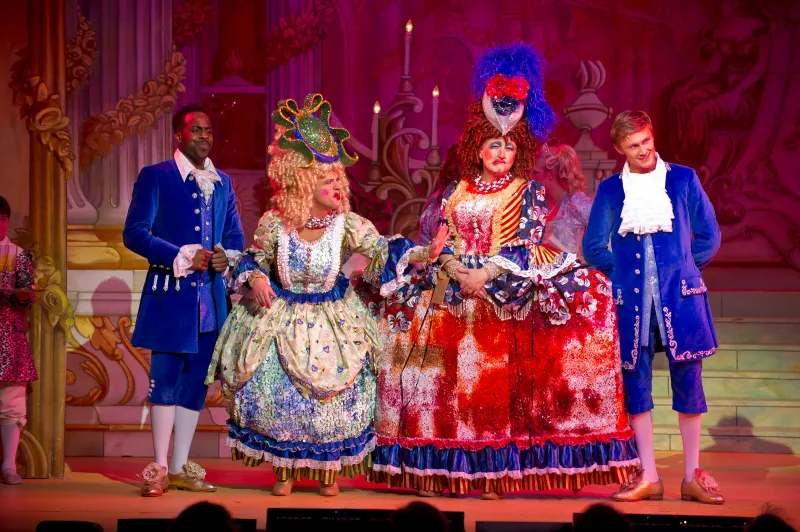
Photo: pantomime backstage costumes quick change British theatre, via www.carryoncostumes.com
The Audition
I knew I was in trouble when the audition panel asked me to read for the role of a talking cow. Not a pantomime cow with a carefully written comic part. A talking cow. The script had three lines, two of which were moo. I delivered them with what I believed at the time was tremendous emotional range. The director wrote something down. It may have been a note. It may have been a drawing of a cow.
British pantomime is a strange and wonderful beast. It is a festive tradition built on silly songs, slapstick, celebrity casting and the cheerful humiliation of anyone who takes themselves too seriously. From the outside, it looks like chaos. From the inside, it is chaos with a running order and a risk assessment.
I have spent enough time backstage during panto season to know that the real show happens in the wings. The stage is for the audience. The wings are for the panic.
The Quick-Change Corridor
The quick-change corridor is where panto really earns its reputation. You have roughly thirty seconds to go from a sparkling fairy godmother into a giant pumpkin, or from a village idiot into a pantomime dame with a wig that requires its own postcode. There is no room for dignity. There is only Velcro, safety pins and the whispered encouragement of a dresser who has seen things.
Last winter, I watched a principal boy lose a boot during a dance number and carry on as if it were a deliberate choreographic choice. I watched a Dame's false eyelash fall into a prop cauldron and get fished out during the interval by a stagehand with a pair of tongs. I watched a fairy's wings snap in half five minutes before the finale and get repaired with gaffer tape and hope. The audience never knew. That is the magic trick. The audience sees sparkle. Backstage, we see ingenuity and mild panic.
Panto is not slick. It is not meant to be. The joy comes from the fact that it is live, slightly dangerous and held together by people who care enormously about whether a child in row C can see the beanstalk.
The Audience Is the Fifth Wall
In ordinary theatre, the fourth wall is the invisible barrier between performer and audience. In panto, that wall does not exist. The audience is not watching the show. The audience is in the show. They boo the villain. They warn the hero. They shout oh no it isn't with the confidence of people who have been rehearsing this moment since childhood.
Heckling is part of the contract. A good panto audience is not passive. It is a living, breathing, slightly overexcited creature. I have seen a seven-year-old reduce a professional actor to tears of laughter with a heckle about his wig. I have seen a grandmother in the front row correct the plot. I have seen a whole stalls section sing the wrong verse of a song with such conviction that the cast simply joined in.
The cast learn to ride it. You cannot fight a panto audience. You can only surf it. The best performers leave gaps for the audience to fill, pause just long enough for a child to shout something devastating, and then carry on as if it were all part of the plan. It rarely is. That is the point.
The Glamour and the Gaffer Tape
People assume panto is all sequins and showbiz glamour. It is, for about four minutes. The rest is hard work. There are two shows a day, sometimes three. There are school matinees where the noise level resembles a small aircraft hangar. There are costume repairs, missed cues, trapped fingers in scenery and the annual mystery of who keeps leaving half-drunk cups of tea on the props table.
But there is also a peculiar joy in the chaos. The cast becomes a strange temporary family. The stage crew become heroes. The front-of-house team become diplomats. Everyone is slightly overtired and slightly hysterical. By the final week, the jokes have become so familiar that the cast laugh at them before the audience does.
And then there is the moment before the curtain goes up. The audience is rustling sweets. The orchestra is tuning. The fairy is checking her wings. The Dame is adjusting something unmentionable. The stage manager says the line. And for a second, everyone remembers why they are there.
Why It Still Matters
Panto is often dismissed as silly. It is silly. That is not a bug. It is the whole point. In a world that takes itself very seriously, there is something genuinely radical about a room full of people of all ages agreeing to boo a man in a false moustache and cheer a talking cow.
It is also one of the few forms of live theatre that families can afford to attend together. It introduces children to the idea that stories can be told in person, in a room, with other people. It gives adults permission to be ridiculous. It gives communities a shared joke.
As the 2026 panto season creaks into life, I will be backstage somewhere, holding a safety pin and pretending to know what I am doing. The fairy wings will probably break. Someone will miss a cue. The audience will heckle. And somewhere in the middle of it all, a child will laugh so hard they forget to be embarrassed. That is why the curtain comes down and then goes back up again. That is why we do it.