Dear Sir or Madam, Yours in Glue: The Cut-Out Complaint Letters That Actually Worked
There is a particular kind of tired that sets in around day nine of a customer service saga. You have explained the problem to four people, three of whom were 'just passing you on to the right team', and one of whom asked you to confirm your date of birth for the third time. Your emails are being answered by a bot that has learned the word 'sorry' but not the word 'refund'.
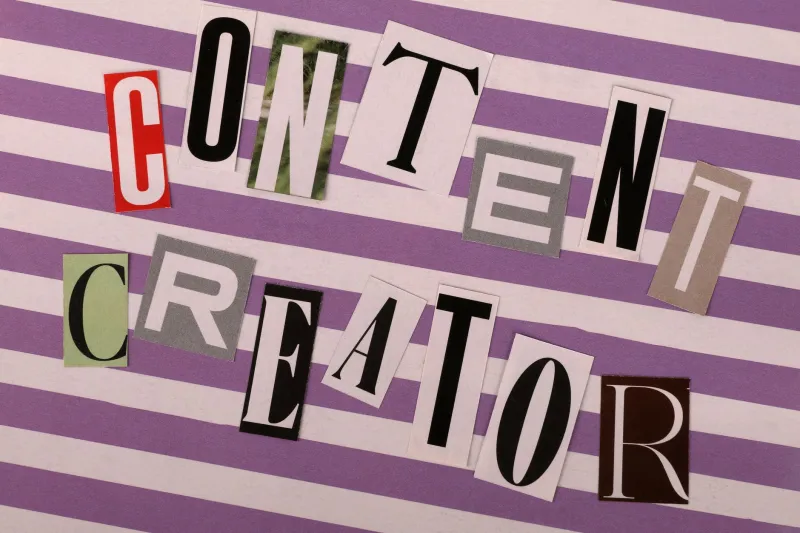
So this spring I tried an experiment. Instead of another polite email, I sent my complaints as ransom notes: cut-out letters, glued to paper, posted first class, with the account number spelled out in mismatched fonts. I tested it on three of the great British institutions: a broadband provider, a parcel firm and the council's bin department.
I am not recommending it wholesale. But I did get a refund, a written apology and, in one case, a phone call from a human being who sounded genuinely rattled in a way that no webchat has ever managed.
The theory
The logic was simple. Every complaints department in 2026 is built to process volume. Web forms, chatbots, auto-acknowledgements, the little progress bar that resets whenever you upload a photo. A cut-out letter is none of those things. It is slow, weird and unmistakably the work of one determined person with a kitchen table and a pair of scissors. It says: I have taken time over this. It also says, quietly: I know where you work.
That second part is a joke. Mostly.
Test one: the broadband that wasn't
The broadband had been dropping out every evening for three weeks. I had done the dance: reset the router, swapped the cable, been told the line was 'performing within acceptable parameters'. So I cut out a single sentence in letters nicked from a takeaway menu and a discarded birthday card: 'I am writing to give you one final opportunity to fix this before I take it further.'
I included the account number, a log of every drop-out with dates and times, and the exact remedy I wanted: a month's refund and a written apology. No sarcasm. No threats beyond the word 'further', which is doing a lot of work in British complaint language.
The reply came in four days. Not a template. A named person, a direct line, an engineer booked for Thursday and the refund applied before he arrived. The apology was two sentences long and slightly awkward, which made it feel real.
The lesson: cut-out letters work best when the content underneath is bulletproof. The gimmick gets you read. The dates and times get you a result.
Test two: the parcel that went on tour
The parcel firm was a harder case. My package had visited three depots and a 'local hub' before being marked as delivered to a shed I do not own. The first webchat response suggested I 'check with neighbours'. The second suggested I 'allow 48 hours'. The third was a survey.
For the ransom note I went more elaborate. I cut out the tracking history in full, glued it to the page like evidence in a detective drama, and added one line: 'Please tell me where my parcel is, in writing, by Friday.'
Backfire. Sort of. The letter clearly got escalated, but it escalated to the wrong place. A security team emailed to ask whether the correspondence was 'intended as a threat'. I had to write back, in normal biro, explaining that it was a joke about stationery and that I would like my saucepan set.
Once that was cleared up, the refund was quick. But it cost me a week and a certain amount of dignity. The cut-out style has a tone problem: it reads as playful to the sender and menacing to a corporate risk department. If your complaint involves anything that could be filed under 'security', use a normal font.
Test three: the bin that wasn't collected
The bin department was, unexpectedly, the best of the three. Missed collections are a classic council failure: you report it, nothing happens, you report it again, a different page tells you to report it somewhere else.
I sent a cut-out note with the collection dates, the reference numbers and a single question: 'Was my street collected on 14 April, yes or no?'
The answer was no, and they said so. A supervisor replied by email, admitted the round had been missed twice, and arranged a catch-up collection. No defensiveness, no 'we take this seriously'. Just a straight answer. It was the most satisfying piece of customer service I have had all year, and it arrived because someone opened an envelope that looked like it had been assembled by a hostage.
Where the gimmick curdled
A few things I would not do again.
Do not use cut-out letters for anything urgent. They look like a puzzle, and puzzles get put in a tray.
Do not overdo the ransom styling. If every word is a different font, the reader spends more time decoding than reading. Mine worked best when the letter was 90 per cent normal typing and 10 per cent glued-on fury.
Do not make it personal. A joke at the expense of the person opening the post is just bullying with extra steps.
And do not expect it to work twice on the same company. The second time, you are no longer a curious one-off. You are a known stationery risk.
What the replies told me about 2026
The most interesting part was not the refunds. It was how quickly each organisation outed itself.
The broadband provider, once you got past the bot, had a real complaints process and a person empowered to use it. The parcel firm had outsourced so much of its judgement that a strangely formatted letter read as a security incident. The council, which everyone complains about, had a human being who simply checked the round sheet and told the truth.
That is UK customer service in 2026 in miniature: not good or bad, but wildly uneven. The cut-out letter is just a way of finding out which kind of organisation you are dealing with, faster than a webform will.
If you are going to try it
Keep the glue tidy. Include your account number, dates and the exact remedy you want. Be polite in the content and slightly strange in the form. Send it first class and keep a copy.
And if someone replies with an actual apology, written by an actual person, consider writing back in biro. It costs nothing to be normal once the point is made.