Tick, Tock, Buy: The Countdown Clock Is the New Threat Level

Photo: online shopping countdown timer on laptop screen with credit card uk, via educationalplatform.in
Every November the emails start arriving like notes pushed under a door. They aren't handwritten, obviously, and nobody has cut letters out of a newspaper, but the grammar is identical: there is a deadline, there is a loss hanging over you, and there is one thing you must do, right now, immediately, before it's too late.
Black Friday week 2026 is upon us. The UK's retailers have been at it since roughly the second week of October, which means by the time the actual day arrives most of us are running on discount fumes. And still the timers tick, the stock alerts flash, and I keep reaching for my wallet like a man who has never been burned before.
Which is odd, because the structure of a retail emergency is precisely the structure of a ransom demand. And I've spent enough time thinking about ransom notes to notice.
The anatomy of a demand
A proper ransom note has four ingredients: a hostage, a threat, a deadline and a demand. Remove any one and the whole thing collapses into an ordinary letter.
Now look at the email that landed in my inbox on Tuesday morning about a coat. The hostage, in this metaphor, is my ability to buy the coat at a sensible price. The threat is that it will go back up. The deadline is a clock in the corner ticking down from 10:00. The demand is a large orange button.
Nobody is holding me hostage. And yet my pulse is doing something it has no business doing over a waterproof layer.
Only three left in stock
This is my favourite of the modern techniques, because it is so beautifully vague. Three left where? In the warehouse in Daventry? In my size? In the one colour that looks like a buffet at a wedding?
More often than not, "three left" means three left in that particular combination of options, with another eleven thousand units sitting somewhere else under a different product code. The number isn't a lie exactly. It's just doing a job. It's the proof-of-life photograph. It exists to make the situation feel real and close and personal.
The deadline is the same trick. A sale that "ends at midnight" is a pleasingly elastic concept — I've watched the same offer expire and resurrect more times than I've had hot dinners. There's a shop I buy from occasionally whose "48 hours only" banner has been running for the best part of three years.
A confession
Last November I bought a coat I did not need.
I want to be clear that I went in strictly for socks. But somewhere between the socks and the checkout, a small clock informed me I had eleven minutes to secure a discount, and beneath it a line of text advised that twelve people were looking at this item right now. Twelve people. I have no idea whether there were twelve people. I have no idea whether there was a clock. I clicked.
The coat arrived. It is fine. It is a coat. The following day the discount was still there, and I felt the specific shame of a person who has been had by their own browser.
The way I got got is worth examining, because it is exactly how a ransom note works: it doesn't give you room to think. A deadline is an efficient piece of persuasion. It replaces a question — do I want this? — with a smaller, easier question — can I stop this from disappearing? Those are not the same question. Only one of them has anything to do with what you actually want.
What a real ransom note gets right
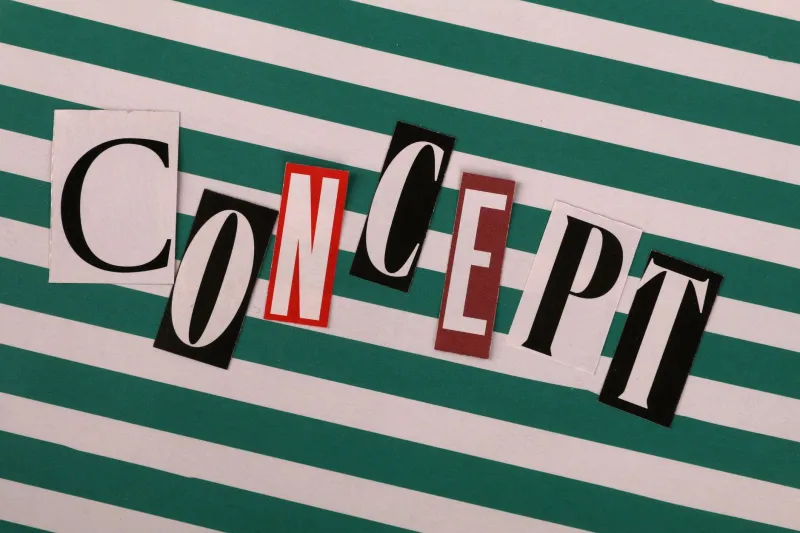
Here's the irony. A ransom note — the paper sort, the cut-out sort, the kind this site was named after — is at least honest about being a threat. It's a menace, but it makes no pretence of being on your side. It doesn't call its demand a treat or a little something for you. It states what it wants in mismatched capitals and leaves you to it.
The retail version dresses the same mechanics in a serif font, calls itself a deal, and wishes you a lovely weekend. That's what makes it slippery. It's a demand in a party hat.
What I do instead now
I'm not going to pretend I've beaten this. I bought something on Wednesday because a page told me it was almost gone. It was not almost gone. I checked on Thursday. It's still there.
The one small defence I've found is delay. The single advantage you have over a countdown clock is that it can't follow you out of the browser. So when the orange button starts pulsing, I close the tab and let the deadline expire without me. If it's still the right thing to buy in 48 hours, at a price I'd have been happy to pay anyway, I'll go back. Nine times out of ten I don't go back.
That's the whole trick, really. A ransom demand works because it makes the deadline feel like a fact of nature. It isn't. It's theatre, staged by a marketing team in a business park, and it runs on the hope that you'll confuse the feeling of urgency with the existence of value.
The clock in the corner of my screen isn't a deadline. It's a script.
And nobody, whatever the email says, is holding my happiness hostage in a warehouse in Daventry.