Cut From the Same Paper: A Defence of the Ransom Note
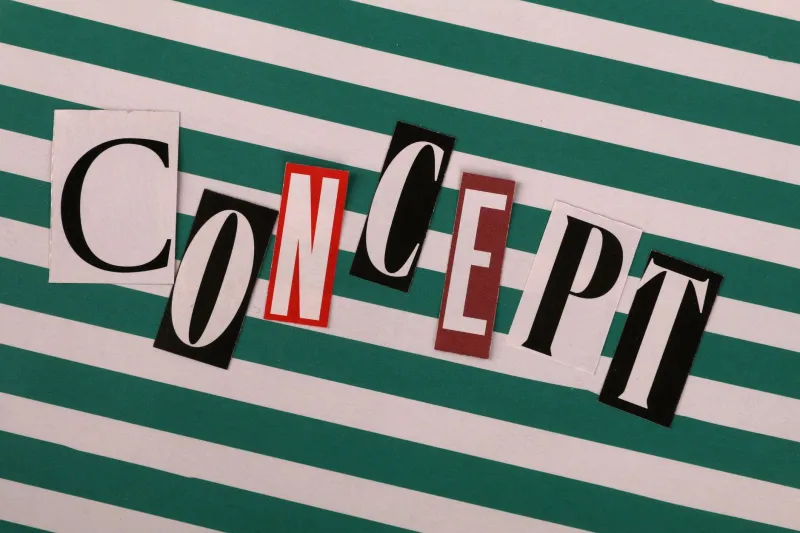
People ask about the name. I say it is a joke, then I hear myself and add, 'but also not entirely.' Ransom Notes is the sort of site name that sounds like a threat made by someone with a Pritt Stick, a stack of old newspapers and too much time on a Tuesday. It gets a laugh. It also gets to the point. That is more than you can say for a lot of writing.
A name that asks a question
A ransom note is not subtle. It does not begin with 'I hope this finds you well.' It does not say 'just circling back' or 'no rush at all.' It says: here is what I want, here is what happens if I do not get it, and here is a deadline. There is a honesty to that which most of us spend all day avoiding. We write emails that pretend to be favours. We write posts that pretend to be thoughts. We write press releases that pretend to be news. A ransom note never pretends. It demands.
That is probably why the form has lasted. Not because kidnapping is a good business model, but because the note itself is such a clean piece of communication. It has a job to do and it does it without a preamble. In a world of 'quick one' and 'just flagging', there is something almost restful about a document that says what it means.
The medieval note was a business document
Long before cinema, a ransom note was practical. In medieval and early-modern Europe, captivity was a transaction. Letters demanded payment, named a deadline, offered proof of life, sometimes haggled. If you go looking for the first English ransom note, you will not find it in Beowulf; that poem belongs to a world of weregild and blood-price, where a life had a price and everyone knew it. The note came later, but the logic was old: name the sum, set the clock, make the demand plain. Nobody was pretending it was a 'gentle reminder'.
That is the part we forget when we treat the ransom note as a cartoon. It was not invented by a film villain with a glue stick. It was a grim piece of administration. It belonged to a world where power was blunt and money was blunt and the letter was just the delivery system. The style came later. The demand came first.
The cut-out letters and the cliché
The newspaper-cutout ransom note is a twentieth-century design cliché. The Lindbergh case in 1932 gave the form a terrible fame, and films turned it into shorthand: letters cut from headlines, pasted at angles, a threat you could hold up to the light. The point was disguise. If the police could not recognise your handwriting, they could not recognise you. But the method became a look. And the look became a joke. You can now buy birthday cards that say 'Happy Birthday' in mismatched ransom letters. That is how you know a form is both dead and immortal.
What interests me is why it keeps coming back. True crime loves it because it is evidence and theatre at once. Advertising loves it because it shouts. Group chats love it because it is a way of saying 'please reply' without saying 'please reply'. The ransom note has become a mood: urgent, silly, slightly unhinged. It is the visual equivalent of sending three question marks.
Why the aesthetic survives
Part of it is that the ransom note is a rare thing: a piece of design that is also a plot device. You see the cut-out letters and you know something has gone wrong. You know someone wants something. You know there is a clock ticking somewhere off-screen. It does not need a caption. It is all caption.
The other part is that it is funny. Not the actual crime, obviously. But the form has been so thoroughly absorbed into birthday cards, bad adverts and group-chat jokes that it now carries a kind of pantomime menace. We can use it because we have defanged it. The cut-out letters no longer mean 'we have your son.' They mean 'I have made a point and I want you to look at it.' That is a strange journey for a style, but styles do that. They get borrowed, softened, sold back to us as wrapping paper.
What this site owes the form
Ransom Notes is not asking for money. It is asking for your time, which is more valuable and harder to get. The name is a reminder of that. It is also a reminder not to be polite when polite would be dishonest. A note that demands something is more honest than a paragraph that pretends not to want anything. I would rather read a piece that knows what it is asking of me than one that drifts around for eight hundred words hoping I will clap.
So I keep the name. It is a joke, a warning and a brief. It says: this is a site with opinions, projects and backstage stories, and it would like you to read them. That is not a ransom demand. But it is a demand. And I think that is fine. Most writing could do with a bit more of that. Not the kidnapping. Just the clarity.