Approved, Pending and Deeply Funny: In Defence of the Parish Council Minute
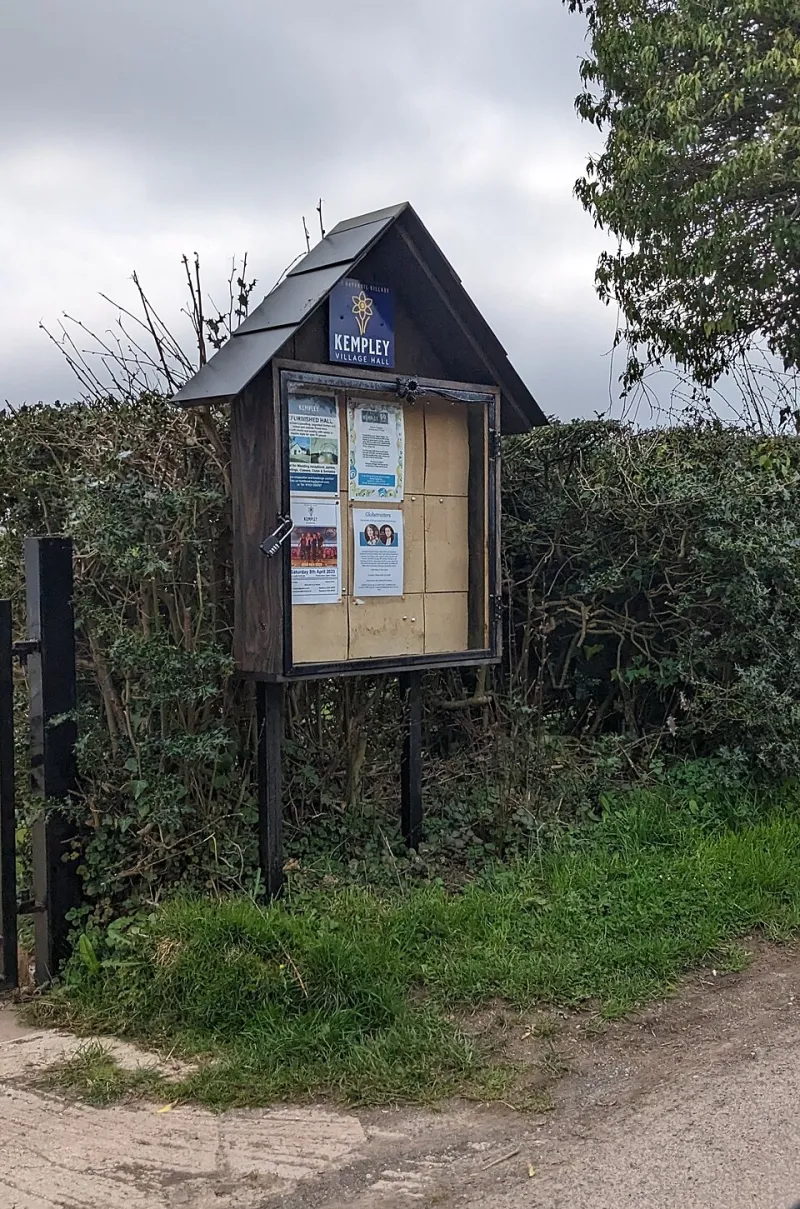
Photo: Jaggery , CC BY-SA 2.0, via Wikimedia Commons
There is a particular kind of A4 sheet that appears in village halls twice a month, usually in a plastic wallet, generally stapled at an angle, and always slightly furred along one edge where the wind has had a go at it. It is headed with the name of a parish council, the date, and the words Minutes of the Meeting. Nobody stops for it. Everybody should.
I have spent a reasonable portion of the past year reading these things properly — standing in front of the noticeboard with a cup of tea, occasionally taking a photo — and I have come to a firm conclusion. The parish council minute is the most underrated comic form in this country. It is free, it is local, it is updated regularly, and it contains more genuine laughs per page than most panel shows manage in a series.
The pinboard is a stage
A minute is a transcript of an evening. That's all it is. Somewhere behind the document there was a trestle table, a urn, a radiator that clanked, and between four and nine people who had given up their Tuesday to discuss a bench. The clerk wrote it all down. The comedy is not invented; it is simply reported.
What makes it work is the staging. A village hall has a very specific atmosphere — floor polish, damp coats, the low hum of a fridge in the kitchen — and the minutes carry that atmosphere in their bones. When you read "The Chairman welcomed those present and reminded the meeting that the defibrillator should not be used to prop open the fire door," you are not reading a joke. You are reading a room you have stood in.
A grammar of the deeply reasonable
The language is the thing. Parish council minutes are written in a dialect of English that exists nowhere else: passive, hedged, agonisingly fair, and capable of applying the same tone of voice to a missing dog bin as to a proposal for forty houses on the green.
It was felt that. Concerns were raised regarding. The meeting considered whether. Apologies had been received from. Members noted.
This is not evasion, whatever it looks like. It is the grammar of a group of volunteers trying very hard not to fall out in public, and the effect is deadpan to the point of poetry. A sentence like "It was agreed that the matter be deferred pending further information regarding the hedge" is, on one level, a small administrative shrug. On another, it is Chekhov.
And then, every so often, something breaks through. A single line of pure human feeling, unmediated and all the funnier for being buried in item 7: "Cllr Mottram asked that it be minuted that he had not been consulted." You can hear the silence after that one. You can hear the radiator.
The curious case of 'matters arising'
No phrase in British public life is more mysterious. It sits near the top of every agenda like a trapdoor, and it means, broadly, things that happened after the last lot of things happened. But read the minutes carefully and you notice that matters rarely arise so much as persist. The same bench reappears. The same dog bin is deferred. The same quote is awaited from the same contractor who has, by now, become a sort of folk figure.
I once found an item that had been carried forward across four consecutive meetings, each time with the note "no further update". Nobody resigned. Nobody shouted. It simply sat there, being not updated, like weather.
Cut-out-and-keep glossary
Stick this in the front of a notebook. You will need it.
- Matters Arising — the past, refusing to leave.
- Apologies for Absence — a list of the sensible.
- Declarations of Interest — where somebody nobly admits they have a stake in the scones.
- Resolved — agreed, but with a little more gravity than agreed.
- Quorate — there are enough of us. It is legal. We may proceed.
- The Minutes of the Previous Meeting — agreed as a true record, whether or not they were.
- Deferred — not now. Possibly not ever. Possibly for four years.
- Noted — we have heard it and we are not going to do anything about it.
- The Clerk to Action — the entire engine of local democracy in five words.
- Any Other Business — the bit where the actual argument happens.
- The meeting closed at 8.42pm — the closest thing to a punchline this form allows.
What the noticeboard has taught me
My own local board has furnished me with a small anthology. There was the evening where a discussion about a bench occupied twenty minutes and produced the line "Members were divided on the question of armrests." There was the meeting where a planning application was opposed on the grounds that it would "materially affect the character of the lane", which is the most British sentence ever written and probably true.
Best of all, at the foot of one set of minutes, entirely without context: "The meeting closed at 8.42pm. Refreshments were served."
I have thought about that line for months. Who served them? What was served? Was it a biscuit situation or did somebody bring a tin? The minutes will not say. The minutes are not that sort of document. They are a record, not a review.
Go and read your own
If you have a noticeboard in a village hall, a library, a church porch or the glass case outside the Co-op, there is almost certainly a set of minutes in it. Read them. Not for the gossip, though there is always a bit. Read them because they are the only public document in Britain written entirely without an audience in mind, by people doing something unglamorous for nothing, in prose that has never once been workshopped.
That is the whole appeal, really. Everything else online is performing. The minutes are just there, stapled at an angle, telling you that the bin was deferred and the bench is still pending and Cllr Mottram would like it noted that he was not consulted.
Take a photo rather than cutting them out, mind. The clerk will thank you.