The Table, the Tape and the Man Who Thought My Cover Was a Threat

Photo: indie zine fair table with handmade zines and collage covers, via img.freepik.com
Last Saturday I paid £24 for the privilege of sitting behind a folding table in a church hall in Brighton, surrounded by people who make zines about grief, buses and the correct way to stack a dishwasher. I was there to sell a ransom-note zine: forty copies, three quid each, held together with a long-arm stapler and the sort of optimism that evaporates by 11:15.
For anyone who has followed the cut-and-paste stuff on this site, this was the next logical step. Ransom notes belong on kitchen tables, obviously. But at some point you have to find out whether the things you make in private can survive contact with the public. The public, it turns out, has questions.
The Kit and the Table Plan
I had overpacked. This is a tradition. My bag contained: forty zines, a tablecloth that turned out to be a bedsheet, a Tupperware of change, a roll of double-sided tape, a spare long-arm stapler, a flask of tea and a banana I never ate. I also brought a small framed sign explaining what a ransom note is, which lasted about nine minutes before I decided it looked like a museum exhibit about my own hobby.
The table layout mattered more than I expected. You get roughly six feet of formica and a chair that has opinions about your spine. I put the zines in two stacks, cover facing up. I put the change float in a tin on the left. I put a little bowl of cut-out letters on the right, because people like touching things, and because it gave me something to do with my hands when nobody was looking.
The first rule of a zine fair: never sit behind a completely flat table. It reads as closed. The second rule: never assume the hall will be warm. The third rule: the person next to you has brought a lamp, and you will resent the lamp.
Three Quid a Go
Let us do the maths, because the maths is part of the story. Table: £24. Printing: £38 for forty copies at a local print shop, which felt reasonable until I remembered I could have bought a lot of glue sticks for that. Travel: £11.40 return. Tea and a sad flapjack: £6.20. Total outlay: £79.60.
Forty copies at £3 is £120. So the theoretical profit is £40.40. In practice I sold thirty-one copies, gave two to people who helped me carry things, and swapped one with a woman who makes a zine about coastal erosion. That leaves £93 in the tin, which means I made about £13.40 for six hours of smiling at strangers. I am not complaining. I am simply noting that the economics of zine fairs are less 'small business' and more 'paid hobby with extra steps'.
The pricing question is awkward. Three quid feels right for a handmade thing. It is less than a pint in most of Brighton, and more than people expect to pay for something that looks like it was made in a hostage situation. A few people asked if I did deals. One man asked if I took card. I said no, then panicked and said I could do a bank transfer, then spent four minutes watching him type my sort code into his phone while the queue behind him examined my stapler.
The Cover Is Not a Threat (Probably)
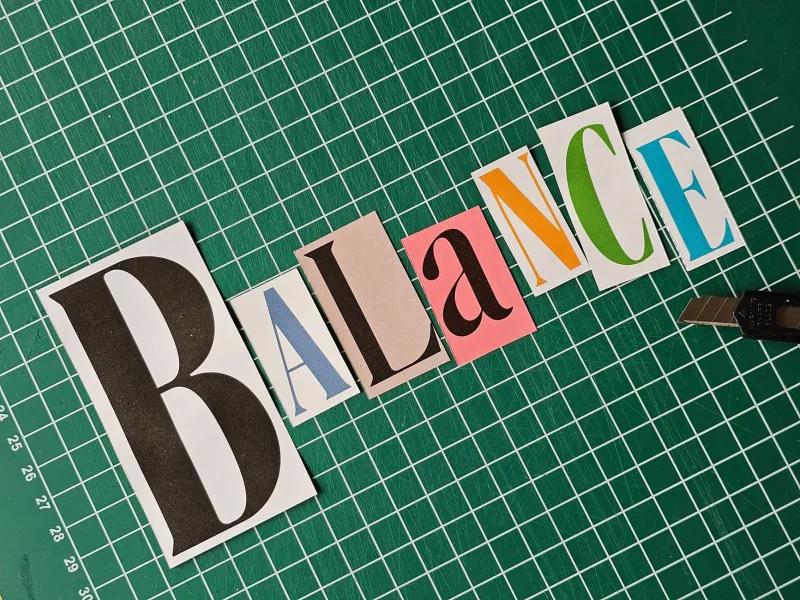
The cover is a collage of cut-out letters spelling 'SORRY FOR THE MESS'. It is meant to be funny. It is meant to look like a note left on a shared kitchen counter after someone has used the last of the milk. Three separate people asked whether it was a threat. One asked if I was 'making a point'. A man in a corduroy jacket picked it up, turned it over, and said, 'Is this about the bins?' I said no. He said, 'Shame,' and bought one anyway.
This is the bit nobody tells you about taking cut-and-paste work into public. The ransom-note aesthetic carries a lot of baggage. People see uneven letters and think kidnapping, or passive aggression, or a very specific complaint about recycling. I spent the day explaining that the letters are just a way of making something look handmade and slightly unhinged. By 2pm I had shortened this to: 'It's a craft thing.' By 3pm I had shortened it to: 'It's silly.'
There is a lesson here about context. On a kitchen table, a ransom note is a joke between you and the fridge. On a trestle table in a church hall, it is a conversation starter, a threat assessment and a Rorschach test. You cannot control which one you are going to get.
Small Talk, Big Lessons
The awkward small talk was the real work. 'Is this your first fair?' 'Do you do this full-time?' 'Have you thought about Etsy?' I had prepared answers for none of these. My default was to over-explain the stapling process. Nobody wants to hear about the stapling process.
The best conversations happened when I stopped trying to sell. A teenager told me she makes zines about her cat and asked how to get the letters to stick without wrinkling the paper. A retired teacher spent ten minutes telling me about the mimeographed newsletters she made in the 1980s. A man bought a copy because his daughter is studying collage at art school and he wanted to show her 'what the old stuff looks like'. I chose not to take offence.
I also learned that a bowl of cut-out letters is a brilliant icebreaker. People cannot resist sorting them. One woman rearranged them into a rude word, then apologised, then bought a zine. Another asked if she could take a single letter home. I said yes. She took an E. I do not know why.
What I'd Do Differently
Next time I will bring a card reader. I will bring a chair cushion. I will print a small sign that says 'Not a threat, just a zine' and I will put it where people can see it before they ask. I will also bring fewer copies, because forty is a lot of stapling and thirty-one is a perfectly respectable afternoon.
But I will keep the table. There is something genuinely lovely about watching a stranger pick up a thing you made, turn it over, frown, laugh and then reach for their wallet. It does not make you rich. It does not even make you £14. But it does make the cut-and-paste tradition feel less like a private obsession and more like a conversation. And if someone wants to have that conversation in a church hall in Brighton, I will happily pay £24 for the table.