Flyleaf Confessions: Seven Strangers Who Left Their Mark in My Second-Hand Books
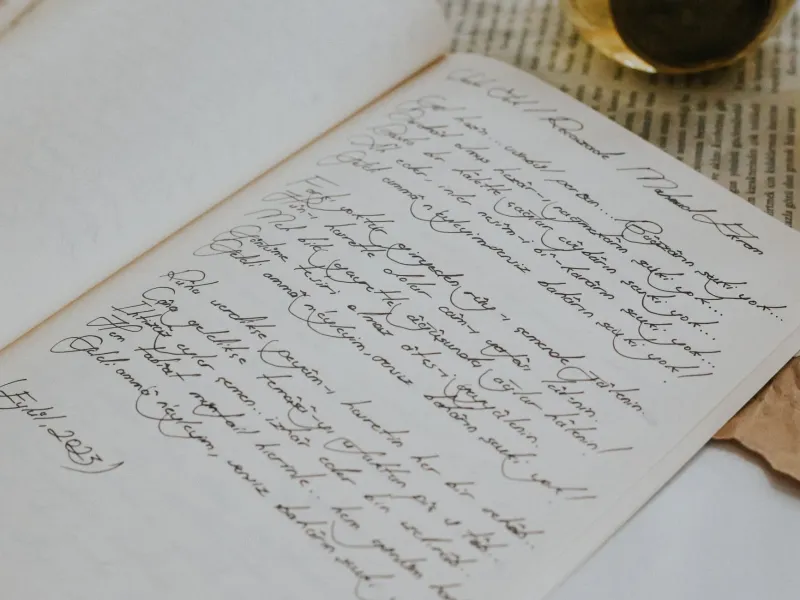
I have a bad habit. I go into a charity shop for one book and leave with four. Not because I need them. Because of the paper inside. A receipt. A name. A pencil line. A bus ticket pressed flat at page 84. In a new book, the margins are clean. In a second-hand book, they are a guestbook.
This is not really about reading. It is about eavesdropping on strangers who have already finished the conversation. Here are seven finds from my shelf, and what they suggest about the British habit of keeping things, passing them on, and quietly insisting that we were here.
1. The Christmas inscription with a warning
Inside a 1970s paperback, in blue biro: To Marjorie, Christmas 1978. Do not lend this to your sister.
That is a whole family Christmas in one sentence. Affection, obligation, and a boundary drawn in ink. It is also very British: a gift given with love and a small pre-emptive complaint. I have never met Marjorie or her sister. I still feel I should not get involved.
The book cost £1.50 from a shop in Kent. The inscription is worth more than the plot.
2. The supermarket receipt as a bookmark
A till receipt from a supermarket, folded twice, inside a thriller. Kitchen roll. Bird seed. Gin. A birthday card for Dad. The date is from the 1990s, which makes the list feel both ancient and immediately familiar.
I like to think the reader bought the book, came home, and used the nearest piece of paper to hold their place. That is British thrift in miniature: nothing is wasted, not even the evidence of a weekly shop. The receipt has outlived the shop, the card, and probably the dad. The book remains.
3. The bus ticket from a place I have never been
A Leeds City Transport ticket, pressed flat at page 84 of a second-hand biography. It was clearly used as a bookmark, then forgotten. The book travelled. The ticket went with it.
There is something oddly moving about a ticket. It is a small proof of motion: someone went somewhere, waited, sat down, read. The ticket says nothing about what they thought of the book, but it does say they were there. That is often enough.
4. The child's drawing of a cat
In a library clear-out copy of a children's novel, on the inside back cover: a crayon cat, round as a teapot, with the name Sarah, age 7 underneath.
This is the least self-conscious marginalia of all. Sarah was not annotating. She was claiming. The book was borrowed, drawn in, returned, withdrawn, sold on, and now sits on my shelf. The cat has survived every stage of that process.
We talk about books being passed on, but we rarely talk about the marks that travel with them. A child's drawing is a tiny act of ownership. It says: I was here, and I had a crayon.
5. The argument with the author
In a serious history paperback, on page 112, in pencil: Nonsense. On page 140, in the same hand: Actually, fair point.
This is the best kind of marginalia. It is a reader changing their mind in real time. No performative review, no star rating, no comment section. Just a person alone with an argument, conceding ground in pencil.
I have no idea who they were. I disagree with them on page 112 and agree with them on page 140. We have never met, but we have had a conversation. That is more than I can say for most of my group chats.
6. The phone number with no name
A scrap of beer mat, tucked into a paperback: Ask for Sylvia — after 6.
No surname. No context. No indication whether Sylvia is a plumber, a book club organiser, or the answer to a bet. It is a plot without a story. I have invented at least four explanations and rejected all of them for being too neat.
This is the note as trap. It invites projection. It is also a reminder that most of what we leave behind is incomplete. The next reader does the rest.
7. The surrender note
Typed on a scrap of paper and left inside a doorstop novel: Gave up at page 60. Life's too short. Good luck.
Honest. Funny. Faintly threatening. It is a review, a warning, and a hand on the shoulder all at once. The previous owner did not finish the book, but they left a message for whoever came next. In a small way, they closed the loop.
What the margins are really saying
Second-hand books are cheap, which is part of the appeal. But the notes add a different kind of value. They are proof that the book was used, not just owned. They are also a reminder of how much British sentimentality lives in small, unglamorous objects. We keep receipts. We press bus tickets. We write do not lend this to your sister in a Christmas present.
There is also the stubborn urge to leave a mark. In a digital age, highlights are synced and searchable. Marginalia is local, private, and easily lost. That is what makes it interesting. It is not a performance for an audience. It is a note to the next person, even if the next person arrives forty years later.
At Ransom Notes, we have a certain fondness for scraps of paper and messages assembled from what is to hand. Marginalia is the same impulse, just quieter. A ransom note says: we have your attention. A flyleaf note says: I was here, and I had a pencil.
The ethics of reading someone else's book
I keep the notes. I do not remove them. But I do feel a small pang when the inscription is personal. A book given as a gift, then sold on, carries a story I was not meant to read. The kind thing is to leave it alone. The curious thing is to read it twice.
I have decided I am a custodian, not an owner. The book will move on again. The note will go with it. Someone else will wonder who Marjorie was, and whether her sister ever got the book back.
So next time you buy a second-hand book, check the flyleaf before you check the price. You are not just buying a story. You are buying evidence that someone else got there first. And if you leave a note for the next reader, make it kind. Or at least funny.