Ask Me About the Glove: Life Inside a Village Hall Lost and Found
The box lives under the table beside the fire extinguisher. It is made of corrugated cardboard, the colour of weak tea, and it has a label in biro: 'LOST PROPERTY — PLEASE ASK.' Asking is the one thing nobody does.
I became its unofficial curator by accident. I was early for a pilates class, late for helping stack chairs, and someone handed me a single black glove. 'Put it in the box,' she said, as if the box had always been there. Reader, the box had always been there. I just hadn't noticed.
The Box Beneath the Table
Village halls are museums of near-misses. Ours hosts toddler group, book club, parish council, a whist drive, a bring-and-buy sale, and a yoga class where the teacher says 'soften your jaw' with the conviction of a bomb disposal expert. In a building like that, things fall out of pockets. Gloves, keys, an umbrella, a child's sock, reading glasses, a Tupperware lid, a dog lead, a paperback with a bookmark at page 42. All of it goes in the box. None of it is ever thrown away.
That is the first thing the box taught me. We are not, officially, a sentimental nation. We are a nation that keeps a margarine tub of screws 'just in case' and a box of lost gloves because throwing one away feels like denying a hand. British hope is rarely a speech. It is a cardboard box under a table.
A Glove Is Not a Glove
There are eleven gloves in the box. Not five pairs and a spare. Eleven individuals. A pink child's glove with a unicorn on the back. A fingerless woolly thing that looks like it belongs to a man who repairs bicycles. A leather glove so stiff it could stand up on its own and demand to see the manager. And one black glove, the founding member, which I now think of as the box's mascot.
We do not bin them because each one implies a person. Somewhere there is a hand that is colder than it was. Somewhere a parent is saying, 'You must have left it at the hall,' while a child denies everything. The glove is not valuable. The glove is evidence.
The embarrassment is what keeps them there. To claim a lost glove you must describe it. 'It's a glove' is not enough. You have to say 'black, wool, hole in the thumb, slightly tragic' and then everyone looks at you as if you have confessed to something. Better, we think, to leave it. Better to buy new gloves and never speak of it again. This is British optimism in its purest form: not the belief that things will work out, but the belief that someone else will deal with it.
The Keys That Open Nothing
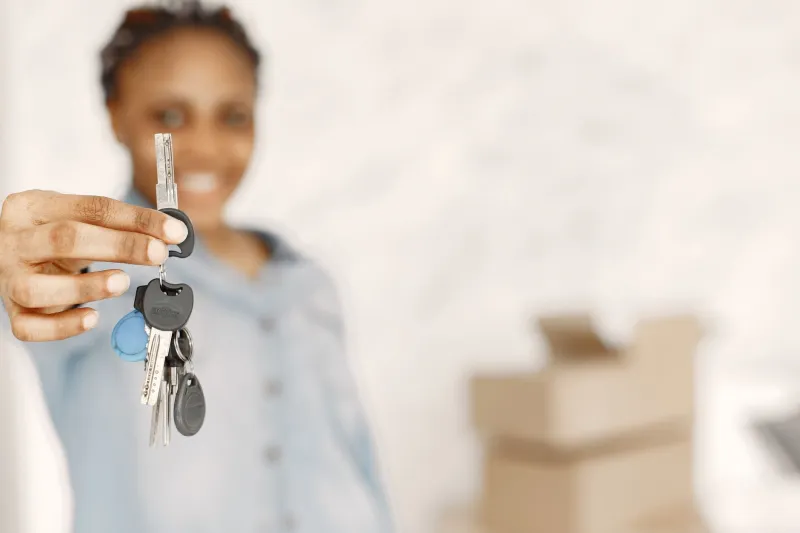
The keys are the real test. There are six of them, rattling around the bottom of the box like tiny metal doubts. One has a fob for a supermarket loyalty card. One is a Yale key worn smooth at the tip. One has a keyring shaped like a bottle opener, which suggests a person with priorities. None has a name, an address or a cardboard tag. They are just keys. They open something, somewhere, and we have no idea what.
You cannot put a key in a lost property box without wondering about the door it belongs to. Is someone still locked out? Did they get a locksmith? Did they stand on a doorstep in the rain, patting their coat pockets with increasing panic, before accepting that the universe had quietly redistributed their house? We will never know. But we keep the keys because throwing them away feels like locking someone out on purpose. That may be the most British sentence I have ever written.
The Umbrella Nobody Described
There is an umbrella in the stand by the door. It has been there since before I became curator. Black, slightly bent, one broken spoke. Everyone has an umbrella like that. Nobody has claimed it, and I think I know why. Claiming a rubbish umbrella means admitting you own a rubbish umbrella. It is easier to pretend you never had one and buy another from a petrol station for £8.
So the umbrella has become communal. People borrow it. They bring it back. It has a social life. It has been to a dentist appointment in the rain and a wedding rehearsal and possibly a funeral, though nobody said. It is the only object in the box that has achieved a kind of freedom. It was lost, then it was useful, then it was lost again. I have stopped thinking of it as unclaimed. It is just on loan to the village.
Hope, Filed Under Miscellaneous
At the bottom of the box there is a Tupperware lid with no tub. A pair of reading glasses with a scratch across the left lens. A single child's sock, striped, which looks as if it escaped from a very specific episode of Postman Pat. A paperback with a bookmark at page 42. A dog lead with no dog, which is either sad or hopeful depending on your mood.
Every item is a small act of faith. We keep them because the owner is coming back. Not today, maybe not this week, but eventually. This is not the loud optimism of motivational posters. It is the quiet optimism of the lost property box: a belief that people are, on the whole, returning. That the world is not just a place where things disappear. That someone will walk through the door and say, 'Actually, I think I left a—' and we will open the box and say, 'Was it this one?'
That is why I have never had a clear-out. In February I did throw away a mouldy swimming cap, and I felt like a traitor for a week. The box is not a bin. It is a waiting room. Hope is not a feeling in here; it is a filing system.
The Duty of the Box
I do not know what the box says about Britain, exactly. It might say that we are a people who would rather keep eleven odd gloves than admit we have lost something. It might say that we are quietly, stubbornly kind. It probably says both, and also that nobody wants to be the person who asks about the umbrella.
What I know is that I have started checking the box every week. Not because I expect a reunion. Because the box is a small reminder that not everything has to be resolved immediately. Some things can wait under a table by a fire extinguisher, labelled in biro, until the right person comes back.
If you are missing a glove, come and ask. We will make you describe it. That is the rule. And if you are missing an umbrella, don't bother. We both know it's not yours.