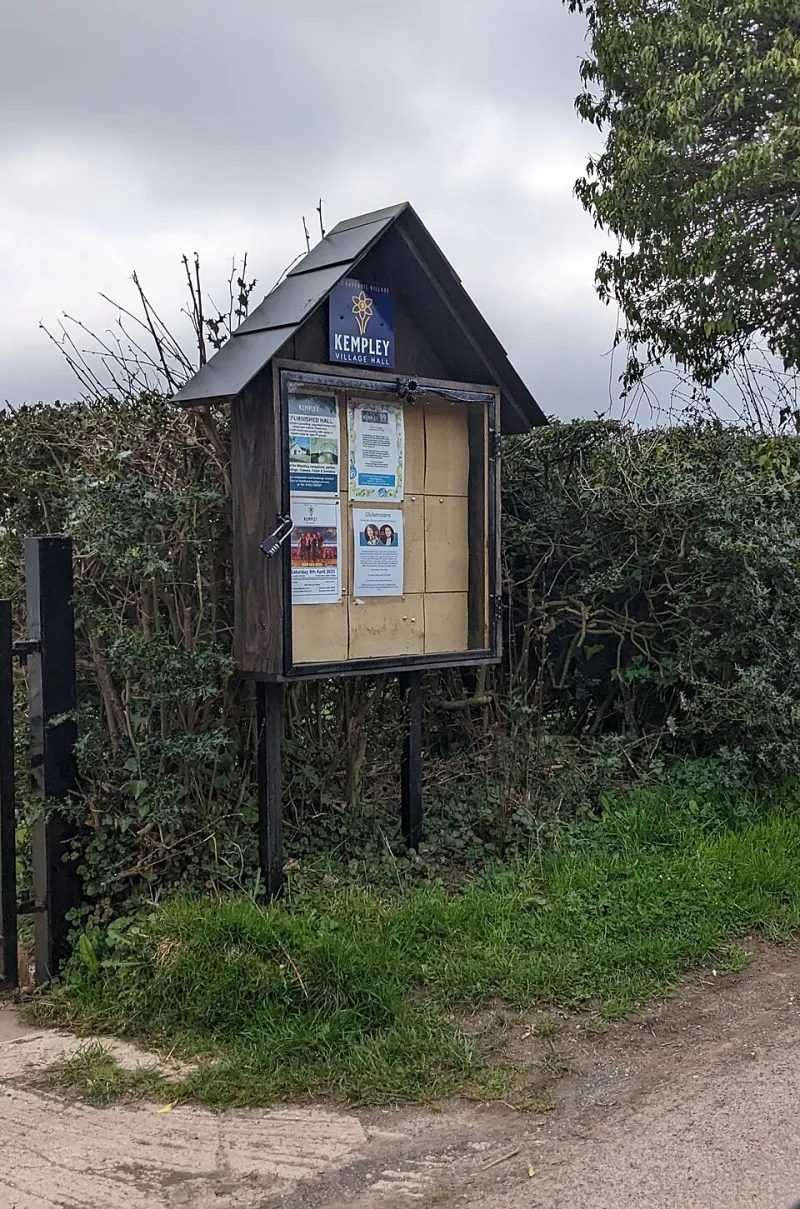
The Paper Internet: Dispatches From the British Noticeboard
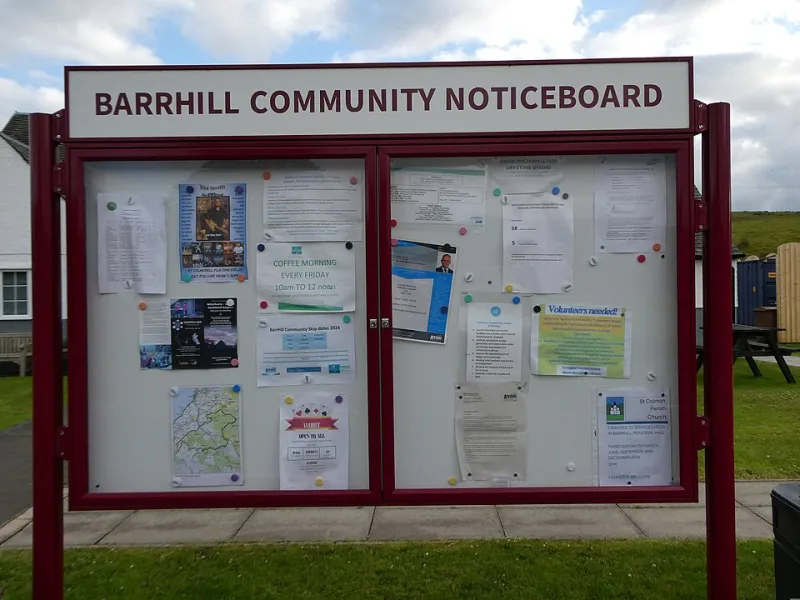
Photo: Billy McCrorie , CC BY-SA 2.0, via Wikimedia Commons
I have a confession: I am a noticeboard rubbernecker. Not the corkboard in my own kitchen, with its sad takeaway menu and a dentist appointment from March. I mean the real ones: the supermarket foyer, the library vestibule, the village hall porch where the wind gets in and the paper curls like old skin.
The taxonomy of local hope
Every noticeboard is a museum of local hope. There is the yoga class that finished two years ago but whose pastel flyer still clings on by one corner, a ghost of downward dog. There is the missing cat, photocopied so many times the cat looks like a smudge with opinions. There is the card for a mobile hairdresser whose number has been torn off so many times that only the word 'MOBILE' remains, floating above a pair of scissors like a threat. And there is always one laminated notice that says, in font size 72, 'PLEASE DO NOT REMOVE TABS.' Below it, all the tabs have been removed.
This is the British noticeboard: a ransom note assembled by an entire village, each person cutting out their own small plea and pinning it up with a wonky thumbtack. It is chaotic, passive-aggressive and occasionally damp. It is also the last truly unmediated social network we have.
The tear-off tab economy
The tear-off tab is the noticeboard's greatest invention. A strip of paper, pre-sliced with scissors or a Stanley knife, carrying a phone number and perhaps a name. You tear one off, you put it in your pocket, you forget about it, you find it in the wash three weeks later. The tab is a promise: I am here, I can help, call me. But it is also a tiny act of vandalism, sanctioned by the person who pinned it up.
I have spent the last fortnight conducting an entirely unscientific survey of tear-off tabs in my corner of the country. The results are striking. The more desperate the service, the more tabs have been taken. The 'dog walker, reliable, fully insured' flyer had lost all twelve tabs. The 'chess club, beginners welcome' had lost none. Draw your own conclusions about British priorities. We will pay someone to walk the dog; we will not learn the Sicilian Defence.
Lamination and other acts of aggression
Then there is the laminated notice. Lamination is a statement of intent. It says: I am not messing about. This information will survive rain, wind and the casual disregard of my neighbours. It is also, often, the most passive-aggressive item on the board. 'PLEASE CLEAN UP AFTER YOUR DOG' is laminated. 'THANK YOU FOR NOT SMOKING' is laminated. 'ANY BAGS OF DOG WASTE LEFT IN THE HEDGE WILL BE RETURNED TO OWNER' is laminated twice, with a photograph of the hedge in question.
The laminated notice is the noticeboard's equivalent of a ransom note written in cut-out letters from a glossy magazine: it is deliberate, it is permanent, and it is slightly unhinged. I respect it enormously.
Corrections and quiet fury
The noticeboard is also a place of public correction. Someone has pinned up a flyer for a 'quiz night, Friday 8pm, £2 entry.' Someone else has written, in biro, 'It's Saturday.' A third person has added, in different biro, 'It's £3.' A fourth has drawn an arrow pointing to the £2 and written 'check your facts.' By the time the quiz happens — on Sunday, apparently — the flyer looks like a GCSE history essay marked by three teachers who hate each other.
These corrections are the closest thing British people have to a comments section. They are polite, they are passive-aggressive, and they are written in handwriting that suggests the author is leaning on a wall while holding a shopping bag. I have seen a notice for a lost glove with a correction reading 'Actually it's a mitten.' I have seen a request for a 'reliable cleaner' amended to 'must have own Hoover.' This is local democracy in action.
The board as a mirror
I love the noticeboard because it is honest. It does not curate. It does not filter. It does not ask you to like and subscribe. It simply pins up whatever the community has to offer, alongside whatever it has lost. It is a place where a missing tortoise can share space with a mindfulness workshop and a reminder that the parish council meeting has moved to the back room of the pub.
And when you stand in front of it, trying to work out whether the mobile number on the tear-off tab belongs to a plumber or a psychic, you are participating in something older than the internet: the human urge to leave a note for a stranger, and hope they read it.
So next time you see a noticeboard, don't just walk past. Stop. Read the passive-aggressive laminate. Count the missing tabs. Spot the correction. It won't change your life, but it will remind you that your neighbours are out there, pinning up their hopes, their losses and their slightly damp flyers, one wonky thumbtack at a time.